
Transend Training
Keeping people with SEND at the heart of the process
How can TranSEND support your service needs?

The work we do supporting special educational needs and disabilities is not easy, we are constantly responding to the ongoing challenges and competing demands.
My role as a trainer and consultant is to make life a little easier, I will listen, understand and respond to your specific training and workforce development needs.
Working to peoples strengths!
Staff teams across both children and adult support services are responding to a diverse and complex range of care and support needs. It’s therefore vital that staff have access to a range of training opportunities which reflect the breadth of their support role.
It’s important to have the right level of skills, knowledge and confidence within your staff team. Having the right support enables service users the opportunity to gain independence and reach their potential whilst enjoying an active and full life within their community.
So, what can I offer?
Each course is written to meet agreed learning outcomes, whether this is for a specific team or service or for a multiagency group.
The courses are carefully tailored and crafted to capture a range of learning styles and approaches which are accessible and relatable to individual participants and the group as whole.
My training starts from early years to preparation for adulthood and beyond.
Training covers a broad and dynamic range of topics relevant to the lives of children, young people and adults with special educational needs and disabilities (SEND) and their families.



Providing an accessible and supportive approach
It’s imperative to me as a practitioner that the training and consultancy support I offer is credible and real.
I have over 20 years social work experience, working for a variety of London boroughs in operational, managerial, strategic and workforce development roles across SEND.
I have developed the relevant knowledge and skills to support you with first-hand practice experience; which makes my training relevant and realistic as well as rewarding for all parties .

TranSEND Training is based in York in the heart of North Yorkshire and offers both face to face or online training across the UK.
I can assist your service with:
- Design and writing of e-learning material and webinars
- Analysis of service training needs and priorities
- Development of a SEND workforce development strategy and action plans
- Facilitate change management and transformation programmes
- Support with the implementation of changes to come out of the SEND and Alternative Provision Green paper
- Support your setting to meet the required standards and expectations of CQC and Ofsted.
The training options available are flexible and versatile they include:
- Stand-alone courses
- Workshops
- Train the trainer
- Co-production of training with staff and experts by experience to promote sustainability within setting
- Action learning sets
- Mentoring of frontline staff and managers
These are some examples of recent training delivered for children and young people:
- Disability awareness
- Safeguarding disabled children
- Domestic abuse – support for disabled children
- Autism awareness
- Understanding intellectual disabilities
- EHCP process, planning and review
- Person centred planning & co – production
- Positive and creative play
- Understanding perceived challenging behaviour
- Positive risk and risk enablement
- Developing a total communication approach
- Intensive interaction
- Finding a voice- creative & effective participation
- Preparation for independence and adult life
- Preparing parents for adulthood
- Sexuality, puberty and relationships
- Safer surfing- social media and internet safety
- Mental health awareness of children with SEND
- Accredited parent support programmes
These are examples of previous training commissioned for adults support services
- The Care Certificate
- Disability awareness
- Autism awareness
- Sensory processing
- Understanding intellectual disabilities
- Safeguarding adults – making safeguarding personal
- Person led and centred planning
- Dignity in care
- Positive risk enablement
- Domestic abuse
- Effective advocacy, participation and engagement
- A total communication approach
- Life story work
- Intensive interaction
- Sexuality and relationships
- Supporting parents with intellectual disabilities
- Bereavement and loss and end of life planning

In addition to the services listed above I’m also a specialist trainer and practitioner in Intensive Interaction. I can offer one to one support and or support staff teams to develop and imbed Intensive Interaction into their setting.
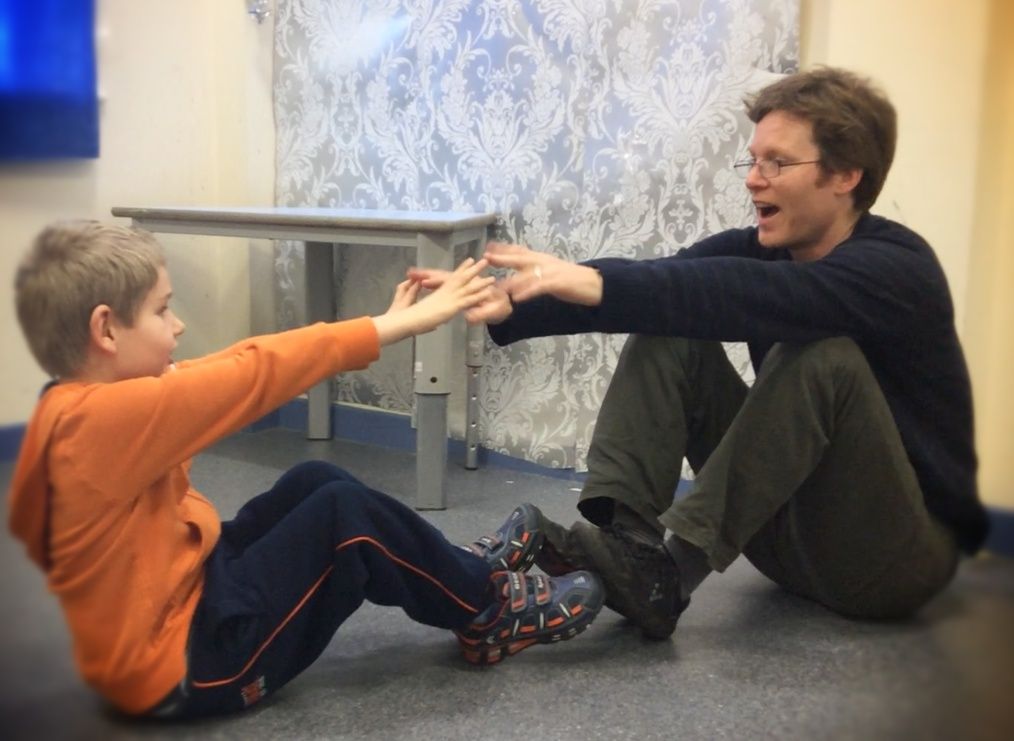
When and how to use Intensive Interaction?
Intensive Interaction is a practical approach that supports and assists the development of positive communication and social interaction with people with communicative disabilities; this includes people with autism spectrum condition, intellectual disabilities, profound and severe multiple disabilities, dementia and brain injuries.
As a teaching approach it focuses on supporting and developing the early communication abilities. People with communicative disabilities may not use speech or understand speech making it more challenging for them initiate or respond to social interactions or communication exchanges that we so often take for granted.
Intensive Interaction was developed in the 1980’s by teachers David Hewett and Melanie Nind. The principles of the approach draws on our knowledge of child development and understanding of early infant/ parent communication and interaction which is practiced in the early stages of communication.
By applying Intensive Interaction we are using techniques to tune into the communicative behaviour and repertoire that the person understands and is familiar with. We are tuning into their ‘language’ to build a connection which demonstrates to the person that we are interested and value them. This in turn nurtures a relationship and trust which enables both parties to enjoying a mutually enjoyable communication exchange. Intensive Interaction promotes engagement ,inclusion and active participation; it develops communication skills and confidence.
Intensive Interaction can be used by all practitioners across all settings from teachers, teaching support staff and care support staff, occupational therapists, speech and language therapists, social workers and psychologists and family.
If you would like more information on using and developing intensive interaction
Please get in touch to discuss all or any of the following services :
- Introductory Intensive Interaction Training for staff and settings
- Consultation and support to develop and use intensive interaction with specific individuals that you support
- Intensive Interaction champions programme – this involves training and support to designated staff who wish to become intensive interaction leads within their setting to promote continuity and sustainability of support.
- One to one support for individuals within your setting who could benefit from intensive interaction.
- One to one support to parents and carers wanting guidance and support in using intensive interaction at home or within a setting.
For further details and or advice, please do not hesitate to get in contact.

Get In Touch
Please get in touch by clicking below to arrange an initial informal telephone call or zoom meeting with Ruth